

There is a persistent belief on the waterways that houseboats are VAT-free, and it is partly true: UK VAT law has two separate zero rates for vessels, and they split along exactly the line this industry already thinks in. Whether either can apply to your project comes down to two gates. The first gate is the big one: is the finished craft navigable, or static? The second is what it takes to pass the gate you are at. We are kit specialists, and that shapes the honest answer at each gate, so this page walks both, with the numbers, and says plainly where zero-rating is realistic from us and where it is not.
The obligatory caveat, meant sincerely: we are fabricators, not tax advisers. VAT liability turns on fine details and changes over time, so confirm your own position with HMRC or your accountant before it matters.

The short version
| What is being supplied | Typical VAT treatment |
|---|---|
| Pontoon base kit, floats, framing, mooring components | standard rate, 20% |
| Floating home kit for a static (non-navigable) home | standard rate, 20%, always |
| Full base + cabin kit for a large navigable residential build | 20% by default; zero-rating assessable case by case |
| Complete static houseboat, sold as a finished vessel (not something we supply; we build kits) | zero-rated |
| Removable contents inside a zero-rated houseboat sale (furniture and similar) | standard rate, 20% |
| Mooring for a statutory houseboat | VAT-exempt |
| Mooring for an ordinary leisure boat | standard rate, 20% |
| Boat designed or substantially and permanently adapted for a disabled person | zero-rated, conditions apply |
Gate one: navigable or static?
Every question on this page resolves differently depending on which side of this line your finished craft sits, the same fork that runs through our planning and licensing guide:
- The static door is the houseboat zero rate: a complete floating decked structure, designed solely as a place of permanent habitation, with no means of self-propulsion and no ready capability for it, is zero-rated when sold as a finished vessel.
- The navigable door is the qualifying ship zero rate: a self-propelled vessel of 15 gross tons or more that is designed as a permanent home rather than for recreation can be zero-rated, a position liveaboard owners confirmed at tribunal. In a neat mirror, HMRC states a houseboat incapable of self-propulsion can never be a qualifying ship.
Both doors demand things a bag of parts does not have. The difference, and it is the difference this page exists to explain, is that the navigable door has a genuine side entrance for kit builds. The static door does not.
The static gate: closed for kits, honestly
The houseboat zero rate attaches to the supply of a complete houseboat. There is no parts route, no partial-completion route and no retrospective route: a structural skeleton is not yet a place of habitation, and VAT liability is fixed at the moment of each supply. We specialise in kits; we do not supply complete finished vessels. So if you are building a static floating home from our components, every supply from us carries VAT at the standard rate, and no structuring changes that. If a zero-rated static home matters more to you than building your own, the honest advice is that it means buying a completed houseboat from a builder who sells them finished, which is a different product from ours.
Two small consolations survive on this side. Even a zero-rated complete houseboat carries standard-rated removable contents, so the relief is never quite as total as it sounds. And once any static home meets the statutory houseboat definition, however it was built, its mooring is VAT-exempt; that one follows the finished boat, not the purchase route.
The navigable gate: where a kit can genuinely qualify
HMRC's guidance allows parts and equipment supplied for incorporation into a qualifying ship in the course of construction to be zero-rated, and parts can include part-assembled structures such as a hull. Modular hull sections and structural cabin framing for a specific build are about as squarely “general structure of a ship” as parts get. The gate therefore turns on whether the finished build will genuinely be a qualifying ship: 15 gross tons or more, self-propelled, designed as a permanent residence.
The 15 gross tons test is friendlier than it sounds
Gross tonnage measures enclosed volume, not weight. It counts the hull cells and the enclosed cabin, and it counts open decks not at all. The formula is GT = K1 × V, with V the total enclosed volume in cubic metres and K1 = 0.2 + 0.02 × log₁₀(V); fifteen gross tons corresponds to roughly 64 m³ of enclosed space.
| Worked example, right at the line | a trimaran on 600F floats, three modules (7.3 m hull), carrying a 6.0 × 3.2 m cabin with 2.5 m internal height: floats 15.9 m³ + cabin 48.0 m³ = 63.9 m³, just over 15 gross tons |
| What does not count | open bow and stern decks, terraces, and anything not permanently enclosed |
| Bigger builds | a full-length widebeam floating home clears the line by a wide margin; borderline cases get a formal tonnage measurement |
So this is not a barge-only relief: sensible full-size navigable homes pass the tonnage test comfortably, and even compact ones can, provided the cabin is genuinely enclosed.
What we need to assess zero-rating, and what rules it out
Base-only sales are ruled out. If we supply just the pontoon base and you design and build your own cabin, the tonnage, the use case and the propulsion all sit outside our scope; we cannot evidence any of the qualifying conditions, so those supplies are standard-rated without exception.
Full base and cabin kit sales can be assessed individually. Because we design both the base and the structural cabin, we can calculate and stand behind the enclosed volume from our own drawings. For a build that might qualify, we agree the following up front, as part of the kit specification:
- Propulsion provision in the build: the propulsion itself, or distinct engine mountings and steering provision, specified in the kit, with your evidenced intention to fit and use it.
- Gross tonnage calculated and proven from the kit design, with the enclosed-volume workings retained.
- A signed declaration of the use case: a permanent residence, not holiday accommodation or a leisure cruiser, for a specific build in progress.
- Professional VAT advice confirming the position before any zero-rated invoice, because the risk of a wrong rating sits with the supplier.
With that pack in place, we can assess whether we can confidently apply zero-rating to the kit supplies for your build. Without it, and on every quote until it exists, VAT is charged at the standard rate. If you are planning a large navigable residential build, raise this at first contact and we will walk the checklist with you; it is genuinely worth the conversation on a build of this size.
The genuine good news, gathered up
- The navigable kit route above is real, and it fits how we actually sell: full floating home kits for self-propelled residential builds of 15+ gross tons, assessed case by case with the evidence pack agreed up front.
- Houseboat moorings are VAT-exempt once the finished boat meets the statutory definition, however it was built. Moorings for qualifying ships may be zero-rated. (Leisure moorings are standard-rated; the boat's status decides.)
- Boats for disabled users can be zero-rated. A boat designed, or substantially and permanently adapted, for use by a disabled person can qualify under a separate relief with its own conditions; low-freeboard, level-deck pontoon craft suit accessible design unusually well. Raise it with us early and confirm the detail with HMRC's guidance.
- VAT-registered businesses reclaim as normal. If you are buying a platform for a business (a pub garden, a hire operation, a work raft), the VAT we charge is normally recoverable input tax; for commercial buyers the standard rate is a cash-flow item, not a cost.
Price a project with the VAT visible
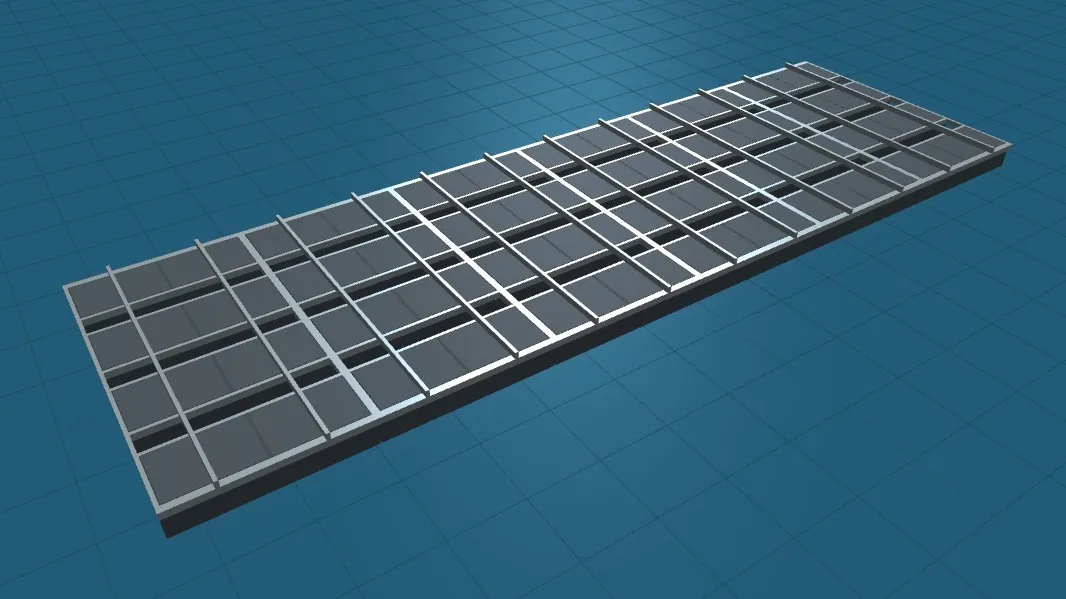
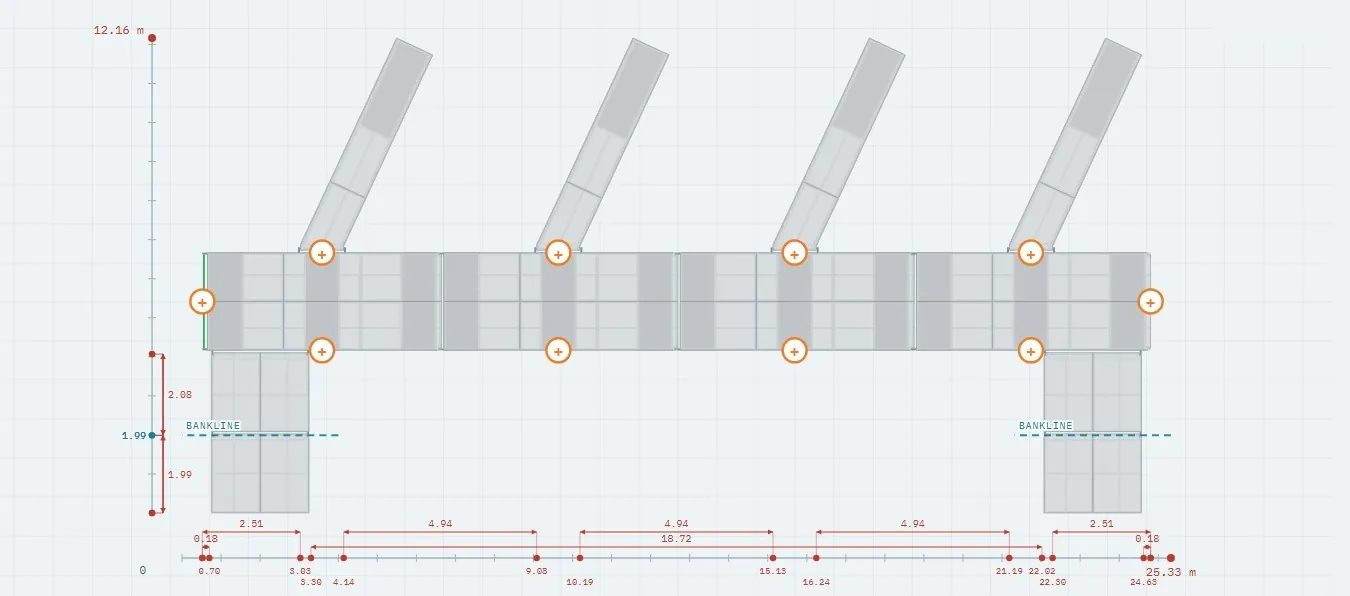
All three builders show ex-VAT pricing with VAT itemised openly, so there is never a question about what you are paying and why:
Common questions
Is a floating home kit zero-rated for VAT?
By default, no: kits, pontoon bases and components are standard-rated at 20%. For a static (non-navigable) home the answer from us is always no, because that relief only covers a complete vessel and we supply kits. For a large navigable residential build there is a genuine case-by-case route: a full base and cabin kit, with propulsion provision, a declared residential use case and a proven gross tonnage of 15 tons or more, can be assessed for zero-rating as parts for a qualifying ship.
Why do people say houseboats are VAT-free?
Because complete vessels can be, by two different doors. A finished static houseboat with no means of self-propulsion can be zero-rated as a houseboat, and a self-propelled vessel of 15 gross tons or more designed as a permanent home can be zero-rated as a qualifying ship. The first door needs a complete vessel, which a kit is not; the second can extend to parts supplied for a qualifying build, under strict conditions.
What does 15 gross tons actually mean?
Volume, not weight: gross tonnage is calculated from the total enclosed volume of the vessel, hull cells and enclosed cabin together, and open decks count nothing. Fifteen gross tons corresponds to roughly 64 cubic metres of enclosed space: a trimaran on 600F floats with a 6 m by 3.2 m cabin at 2.5 m internal height sits just over the line, and full-size floating homes clear it comfortably. A formal tonnage measurement settles borderline cases.
Can my kit purchase be zero-rated as parts for a qualifying ship?
Only on a full base and cabin kit, assessed individually, and never by default. Base-only sales are ruled out: with the cabin, use and propulsion outside our scope we cannot evidence the qualifying conditions. On a full kit we need to agree propulsion provision in the build, calculate and prove the gross tonnage from the kit design, and hold your signed declaration of the residential use case, with the position confirmed by professional VAT advice before any zero-rated invoice.
If I finish my kit into a complete houseboat, can I reclaim the VAT afterwards?
No. VAT liability is fixed supply by supply at the time each supply is made, so parts correctly standard-rated when sold stay standard-rated whatever the finished boat later becomes, and there is no marine equivalent of the DIY housebuilders refund scheme. If zero-rating is going to apply to a project, it has to be structured that way from the start.
Are mooring fees VAT-free for houseboats?
If the finished boat meets the statutory houseboat definition (a floating decked structure designed solely as a place of permanent habitation, without self-propulsion), the supply of its mooring is VAT-exempt, however the boat was originally built or bought. Moorings for qualifying ships may be zero-rated. Moorings for ordinary leisure boats are standard-rated.
Are there any other VAT reliefs for floating structures?
A few genuine ones: boats designed or substantially and permanently adapted for use by disabled people can be zero-rated under a separate relief, and VAT-registered businesses buying platforms for business use can normally reclaim the VAT they are charged. Always confirm your own position with HMRC or your accountant.
More advice guides
- Planning, Licensing & Mooring Consent: which permissions apply to a floating home, and who to ask
- Pontoon Hulls vs Steel vs Concrete: an honest comparison of what your home floats on
- Self-Build Compliance: RCR, BSS & Build Standards: certification, safety schemes and build standards for self-builds
Sources & further reading
- HMRC VAT Notice 701/20: caravans and houseboats (the houseboat definition, zero-rating conditions, removable contents, exempt moorings)
- HMRC VAT Notice 744C: ships, trains, aircraft and associated services (qualifying ships, residential vessels, part-constructed ships, parts and equipment, gross tonnage)
- HMRC internal manual VATLP17000: moorings
- HMRC internal manual VTRANS110540: other reliefs for boats (houseboats; boats for disabled people)
- DBA, The Barge Association: UK VAT on barges (residential vessels as qualifying ships; the tribunal background)
- Port of London Authority: VAT on houseboats and qualifying ships
This page describes UK VAT treatment as published in HMRC guidance and was checked in September 2026. It is general information, not tax advice; liability depends on the exact facts of each supply, so confirm your position with HMRC or your accountant.